
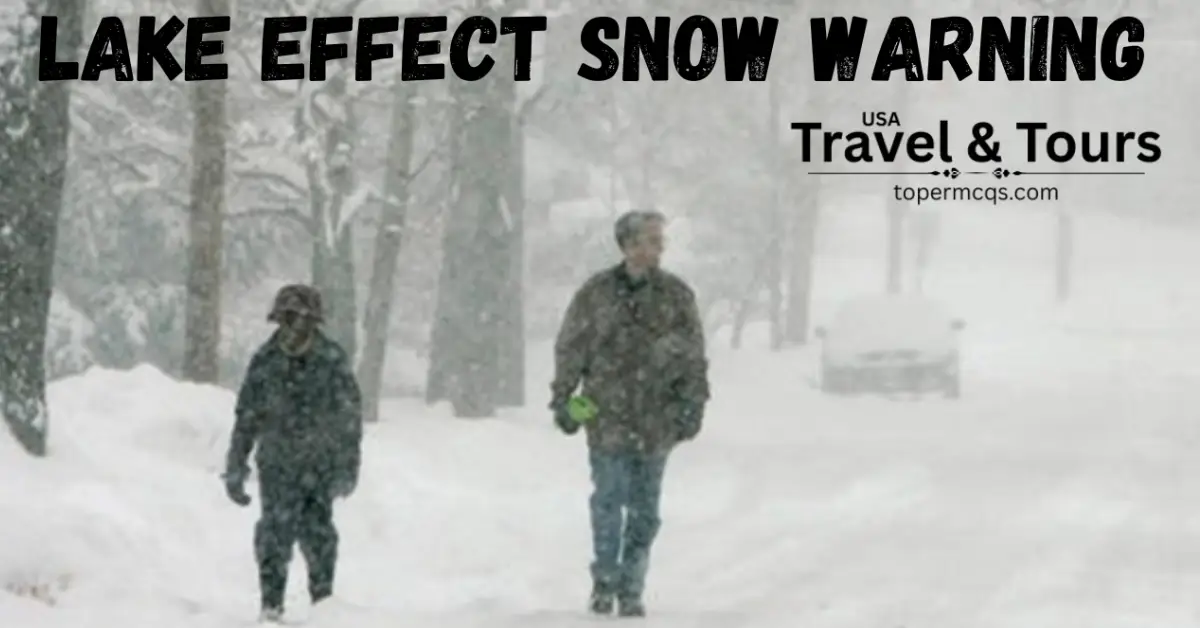
What Is a Lake Effect Snow Warning?
A lake effect snow warning is the highest alert the National Weather Service (NWS) issues for a lake-effect snow storm. It means bands of snow born over the Great Lakes snow belts will soon pound one zone with whiteout bursts and road-closing drifts, often without wider regional snowfall.
Difference between lake effect snow advisory and warning levels rests on severity. Advisories flag nuisance squalls; warnings demand action. Buffalo’s 2022 blitz, for instance, leapt from watch to warning once models showed intense snowfall rates topping three inches an hour and visibility below ¼ mile.
How Lake Effect Snow Forms: The Science Explained
When an Arctic cold air mass over warm lake water meets onshore westerly winds, rising plumes trigger lake-induced convection. Inside the frosty Dendritic Growth Zone (DGZ), superb crystal growth fuels towering clouds that squeeze out snow almost instantly.
Band strength hinges on fetch length across Lake Erie, the lake surface temperature gradient, and steering flow. If winds align with the lake’s long axis, mesoscale snow bands can stall; what causes lake effect snow bands to stall over one area is chiefly wind shear pivot points and weak upper support.
Regions Most Affected by Lake Effect Snow in the United States
Counties hugging Lake Erie • Lake Ontario • Lake Superior • Lake Michigan • Lake Huron endure the fiercest barrages. The Lake Ontario snow machine regularly buries New York’s Tug Hill Plateau, while Michigan’s Keweenaw Peninsula soaks up moisture siphoned from Superior.
Buffalo record snowfall shows why residents shovel more than Rochester; topography funnels moisture against the Niagara Escarpment. Why does lake effect snow hit Buffalo harder than Rochester? Simple: longer fetch, warmer lake temps, and a shoreline curve that steers bands straight over Erie County.
Typical Weather Patterns Preceding a Lake Effect Snow Event
An inbound Polar Vortex lobe or Alberta clipper yanks frigid air south. As it crosses the lakes, snow squall band echoes bloom on radar. Meteorologists weigh Synoptic vs. mesoscale forcing to gauge how wide or narrow the squalls may become.
Before flakes fly, forecasters scan NWS winter weather products for moisture depth, wind alignment, and equilibrium level. Buffalo forecasters often cite the average snowfall totals during a lake effect snow event on Lake Erie, roughly 8–12 inches, though single-band storms can triple that mark.
NWS Criteria: When Does a Lake Effect Snow Watch Become a Warning?
Upgrade happens once models show two keys: Visibility below ¼ mile will persist and hourly totals exceed 2–3 inches. The National Weather Service (NWS) pushes cellphone alerts, highway signs, and local sirens the moment thresholds lock in.
The alert drops when snow lessens or shifts offshore, but when does the National Weather Service issue a lake effect snow warning again? Any fresh Arctic burst that reinstates intense snowfall rates will kick the county back into warning status within minutes.
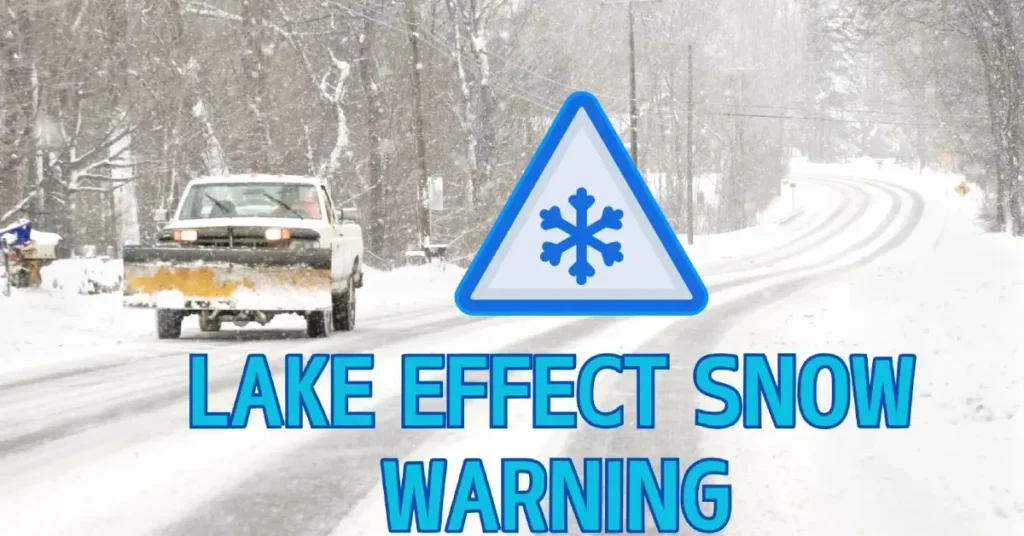
Impacts on Travel: Road, Air, and Public Transit Disruptions
Whiteout driving hazards slam I-90 and US 20 fastest, and wind-driven drifting snow quickly hides lane markings. Locals check maps for the safest routes to avoid lake effect snow in upstate New York, often choosing inland detours that dodge the shoreline fetch.
At airports, de-icing trucks scramble while pilots wait. Many travelers research the best snow tires for driving in Great Lakes snow belts before winter. Rail and bus lines shorten runs, trading punctuality for safety until the squall conveyor finally breaks.
Preparing Your Home and Vehicle for Heavy Lake Effect Snow
Secure attic insulation, clear vents, and know roof load limits after heavy snow because dense banks can weigh 60 lb ft-2. City officials announce emergency snow parking bans so plows can sweep curb to curb. Mechanics answer how to prepare your car for a lake effect snow warning: coolant check, battery test, full gas.
Generators bridge grid gaps; pick wattage using portable generator sizing for multi-day lake effect power outages calculators. Lubricate chute fittings and spark plugs; those snow blower maintenance tips keep machines roaring during back-to-back bursts.
Emergency Supplies Checklist for Lake Effect Snow Storms
Families print an emergency kit checklist for lake effect blizzards that covers water, shelf-stable meals, meds, and pet food for at least 72 hours. Many stash wood or kerosene for warmth in case the grid fails and pipes freeze.
After you grab flashlights, radios, and spare phone batteries, download the best apps for real-time lake effect snow radar tracking to time errands between bursts. Table 1 summarizes core gear.
| Category | Essential Items | Notes |
| Power | Generator, power bank | Fuel & extension cords |
| Warmth | Wool blankets, hand warmers | Avoid open-flame heaters indoors |
| Food | High-calorie bars, canned soup | Manual can opener vital |
| Safety | First-aid kit, whistle, flares | Mark house number for rescuers |
You can also read about: Lake George Tour Guide: Explore the Heart of the Adirondacks
School and Business Closures: What to Expect and How to Plan
Superintendents weigh bus visibility, salt stock, and forecast timing; school closing policies during lake effect snowstorms in Ohio typically trigger after 4 a.m. plow reports. Parents keep alert apps handy, lining up neighbors or remote work plans before the robo-call arrives.
Corporate HR drafts closure memos, but travelers book budget hotel options during lake effect snow travel disruptions if highways shut. A quick shift to cloud drives and video calls keeps production humming until the roads reopen.
Safety Tips: Driving, Shoveling, and Staying Warm During the Storm
Plow-pile shoveling strains hearts, so cardiologists stress tips for shoveling heavy lake effect snow without injury: push, don’t lift; pause often; hydrate. Old snowblowers need tune-ups; sharp auger blades and new shear pins prevent jams under the heaviest drifts.
Layer wicking base gear, fleece mid-layers, and windproof shells to beat the Wind Chill Index that can plummet far below air temperature. Remember traffic lights may go dark, so treat every intersection as a four-way stop until crews restore power.
After the Snowfall: Cleanup, Melting Hazards, and Roof Safety
Rake eaves early; experts show how to calculate roof snow load after intense lake effect storms by measuring depth and density against code charts. Exceed limits and rafters may creak before collapsing; call professionals when drifts top windows.
Check gutters for ice dams and note Snow-water equivalent (SWE) readings to predict flooding once thaw begins. Many enthusiasts stream drifts via webcams; where to find live webcams of lake effect snow bands includes DOT cams, college rooftops, and ski-hill feeds.
Climate Change and the Future Frequency of Lake Effect Snow Warnings
Scientists weigh the climate change impact on lake-effect events as warmer, ice-free lakes extend snow season well into spring. Meteorologists debate does climate change increase lake effect snow frequency or merely intensify bursts; studies already show more autumn warnings than in the 1980s.
Communities adapt by boosting plow fleets and revising codes for denser snow. Planners ask what is the fetch length needed for extreme lake effect snowfall once surface temps climb. Longer ice-free tracks may push warnings farther inland, making robust response plans essential.
Lake effect snow warning strategies have evolved, but vigilance remains crucial. By mastering science, preparation, and recovery, residents outpace storms and protect families whenever the lakes awaken.